road to The Rest Of You
third: the research

dear reader,
welcome to part 3 of road to The Rest Of You. how have you found it so far? maybe it’s given you some insight into my process, and if you’re a writer embarking on your first novel - a little hope too. learn from my mistakes to make your approach much better.
anyway, had to get into it for part 3 as there’s a lot to cover. enjoy.
MB x

the research
i did a lot of research because i received a ‘develop your creative practice’ grant to do so. it also paid for time at a private library membership to delve into Ghanaian archival documents held by British institutions (of course). i had a year to research the last fifty years or so of Ghanaian history, gather what i needed to gather, and do a three month course to help me figure out how exactly to write a historical novel, or something resembling it.
to be clear, i knew nothing about nothing. i had not grown up being told tales of Ghanaian history in a coherent, linear way where i might have been able to put the pieces together. and even if i had at some point in my youth been told in one sitting the story of my family and the history of our lineage as belonging to a branch of the Asante royal family, trauma is a thief of memories. it steals the good and the bad, and most times only leaves you with the awful. it is a thief of time too, so my memory of childhood is spotty and out of order, let alone the things i may or may not have been told about the family heritage that i already felt little connection to.
so at 36, i was ready to learn, to close some gaps and maybe write something that connects the world i know with the one of my elders. as writers we will always inevitably write some of our own story, even when what ends up on the page, looks nothing like our life. we still start with questions that we need answers to.
as i read, i learned about the matriarchal backbone of the Asante people, the power behind the women, the things that have persisted throughout generations, the patterns that continue to show themselves in family dynamics across the diaspora. i recognised parts of my life, the way society and culture shifted as the years went on, drastically altered by colonisation and the lasting effects the white Europeans had left on Ghana, on the people who stayed and the ones who left, carrying these ideas and beliefs with them.
this is what the characters grew from - Gloria, Aretha and Maame Serwaa. i had no real idea what to do with them though. i knew their names and nothing else. but thankfully, i had my historical fiction course, and my tutor (the incredible Louise Hare) teaching me how to dig deep into my character backgrounds, their historical context, and question the parts of it that could be relevant to the narrative i wanted to build.
what did they eat? what did they do after school, at work? what were their relationships? what did they care about? what did they dream of? how was the world working around them? did they interact with it? what was their place in society?
and so many more questions, scenarios, things to consider to really root them in a place and time i had never lived. i spent three intensive months thinking and writing about these characters - not writing anything that would end up in the novel, but simply writing them and figuring them out. likes, dislikes, beliefs, wants, desires, frustrations, fears - it was all there in pages and pages of notes about them.
eventually, after almost a year, i was ready to put to practice what i had learned about them and Ghana; to go there and bring to life some of what i imagined.
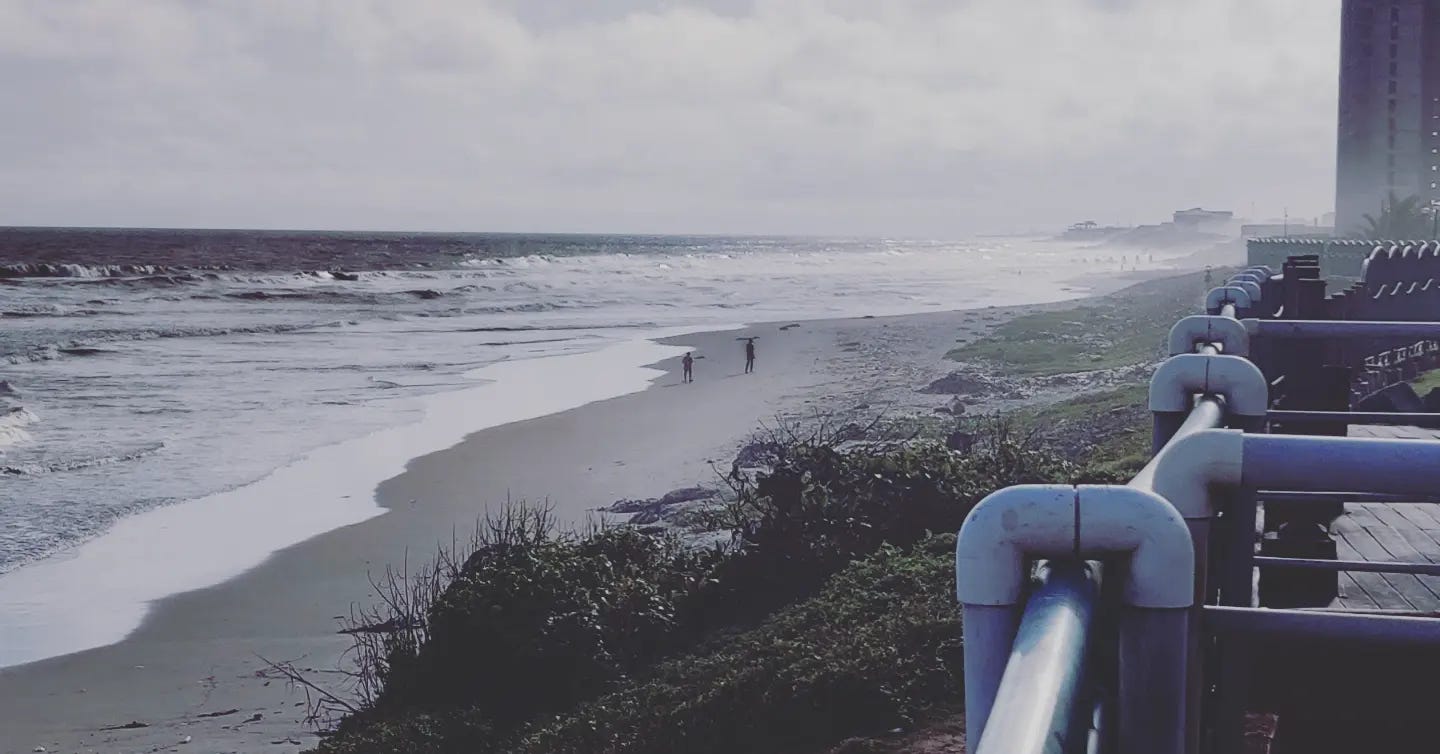
in the midst of that, i no longer had an agent, and i was pretty deflated. it was only a few weeks before my trip to Ghana and i feared it had all been for nothing. or i would have to pluck up the energy to write this next thing anyway and put that out myself, hell or high water. i would do it if i had to.
soon after though, thanks eternally to a writer friend for the introduction, i began conversations with a potential new agent. i hadn’t mentioned my trip to Ghana yet, because that was going to be the next book - i needed to get this London book sorted first! and then she read what i had so far, sixty-thousand words of Whitney’s story and she said, “Something’s missing. I really liked this, but I kind of want to know what’s happened in Ghana”.
i hadn’t signed with her yet, this was us just seeing if we were even a good fit. i laughed when she said it, telling her i would be travelling to Ghana in the coming weeks to write the book’s companion piece. we agreed that i would consider whether it was actually one whole book i was writing, rather than two. i had been so fixed on the idea of two or even three books for so long, i was resistant initially, but i took some time and the more i thought about it and we talked about it, the more i could see what she was getting at. but i hadn’t written the Ghana bits yet; who could say if it would work?
about two days into my Ghana trip, the words flowed as if unto themselves. not from nothing, but because for a year i had been researching the history, the society and my own characters. they were merely sitting dormant in my mind, waiting for me to activate them as soon as i was able to touch Ghanaian soil. it felt like magic. i sent the first few pages to my new agent (yes i signed with her, of course i did, when you get a note that causes you to burst with creativity, you keep that person around), and she told me she had no notes, that i needed only to keep going.
The Rest Of You as it is now came together pretty quickly after that and i was so confident and proud of that manuscript when it was done. i still am.
it’s funny the things you remember and what gets pushed to the back of your mind when you try to recall a significant period in your adult life. the end of 2022 was a difficult time for me; a lot of old trauma had been dredged up and my mental health was at its very lowest. i was in the middle of a crisis of identity, life was becoming financially precarious, and i wasn’t sure i was on the right path, or if there was even a path for me to take. but the writing and the characters persisted; they gave me something to focus on and head towards.
to keep writing was to defy the odds and continue searching for certainty, even if i had to write it into existence myself.
so i did, and it came to something, eventually.
MB x
the book in question, available now in the US, the UK, West Africa, and Australia.